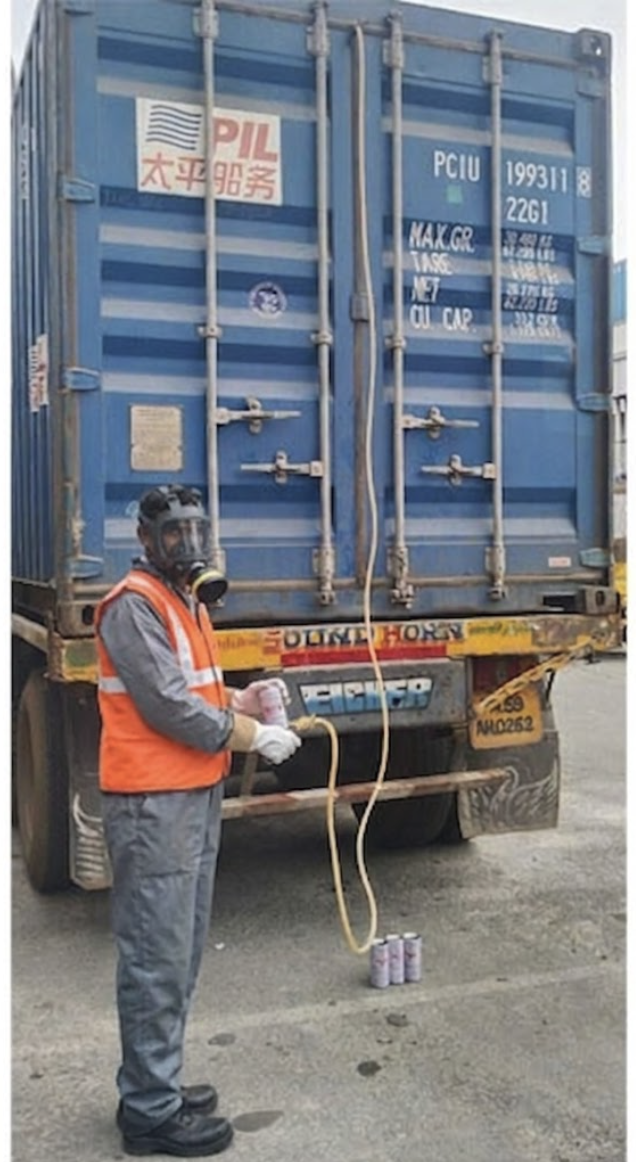
Safety Practices
Safety practices for fumigation include:
Fumigation involves using a fumigant gas to kill infestations in a space. The space is then ventilated to allow the gases to escape.
Fumigation can be dangerous and pose risks to human health and the environment.
Core Safety Operations
Container Management
Regularly inspect pressurized cylinders, fittings, and regulator valves for structural leaks. Keep comprehensive cylinder maintenance logs and safely dispose of empty cylinders strictly adhering to national hazardous waste regulations and manufacturer guidelines.
Ventilation
Operate high-capacity forced-induction exhaust fans to fully exchange air and disperse residual vapors. Always perform positive clearance testing using calibrated gas detectors before permitting personnel entry into any previously fumigated storage zone.
Labeling
Clearly mark all chemical storage cylinders with weather-resistant labels detailing the product name, active concentration, hazard classifications, and emergency phone numbers. Post highly visible danger/poison warnings at all facility entryways during active treatments.
Fire Safety
Carry out comprehensive fire risk assessments in storage bays. Equip facilities with Class D and dry chemical fire extinguishers, install fail-safe electrical grounding systems to mitigate static sparks, and conduct regular fire-response training exercises with staff.
Personal Protection
Equip all handlers with approved Self-Contained Breathing Apparatus (SCBA) or full-face respirators fitted with proper chemical canisters. Enforce the use of heavy-duty chemical-resistant gloves, protective coveralls, and steel-toed boots. Wash skin immediately in emergency shower bays if contact occurs.
Environmental Protection
Minimize ecological footprints by employing precision gas dosing systems to prevent excess chemical release. Opt for targeted, bio-degradable pest controls and low-impact organic alternatives whenever they align with import/export biosecurity guidelines.
Water Safety
Design concrete containment bunds and buffer zones around chemical storage areas to prevent liquid runoff. Never perform cleaning operations near local surface streams, municipal drainage networks, or underground water tables.
Storage Security
Store all fumigants, equipment, and spent canisters in secure, double-locked containment cabinets protected by electronic access controls and surveillance. Ensure warning signs ("AUTHORIZED PERSONNEL ONLY") are posted prominently at all times.
Step-by-Step Safety Checklist
1 Pre-Fumigation Audit
- Perform complete structural integrity inspection of the area to be treated.
- Verify all access entry points are sealed airtight using industrial gas-proof sheets.
- Evacuate all non-authorized personnel and verify presence of required PPE.
- Post bold warning signs (Danger/Poison) at all prominent boundaries.
2 During Treatment Safety
- Monitor gas concentrations continuously using remote electronic sensor lines.
- Maintain visual perimeter surveillance to prevent accidental site breaches.
- Keep emergency SCBA units and communication equipment fully charged on standby.
- Log weather patterns (wind speed/direction) to assess drift safety boundary.
3 Post-Treatment Clearance
- Initiate controlled exhaust system ventilation until TLV guidelines are achieved.
- Conduct multi-point clearance testing using calibrated gas detection devices.
- Issue official Fumigation Certificate only after zero residual gas is verified.
- Remove safety seals, sign boards, and return containment zones to standard access.
First Aid & Exposure Protocols
Inhalation Exposure Response
-
Immediate Evacuation: Immediately move the affected worker to fresh air. If doing so, rescue personnel must wear positive-pressure SCBA equipment to prevent secondary exposure.
-
Respiratory Support: If the patient is not breathing, administer artificial respiration immediately using a bag-valve-mask. Do not perform direct mouth-to-mouth resuscitation.
-
Medical Attention: Administer medical oxygen if breathing is labored and keep the patient warm. Seek urgent specialized emergency medical support immediately.
Skin & Eye Contact Protocols
-
Skin Irrigation: Immediately strip off contaminated clothing under an emergency shower. Wash the affected skin surface thoroughly with copious amounts of water and mild soap for at least 15 minutes.
-
Eye Flushing: Flush eyes immediately with wide, continuous streams of clean water using dedicated eye wash stations. Keep eyelids wide open and flush for at least 15-20 minutes.
-
Clinical Evaluation: Cover any chemical skin burns with clean, sterile dressings. Transport the patient to the nearest specialty hospital unit for emergency clinical evaluation and treatment.
Quarantine & Regulatory Standards
IPPC & ISPM-15
Full compliance with International Standards for Phytosanitary Measures (ISPM 15) to prevent global transmission of forest pests through wood packaging materials used in export cargo.
CIB & RC Registrations
Authorized handling of government-regulated chemical fumigants like Methyl Bromide and Phosphine Gas, adhering to Central Insecticide Board and Registration Committee guidelines.
DPPQS National Standards
Operation under certifications issued by the Directorate of Plant Protection, Quarantine & Storage (DPPQS) to ensure safe, legally compliant national and international trade sanitization.